Where Water Speaks First: The Master Gardeners Who Build Damascus' Indoor Paradises
Every American guest arrives at a Damascene luxury hotel with the same instinct: to pause, just inside the door, and look up. Not at a chandelier. At a tree.
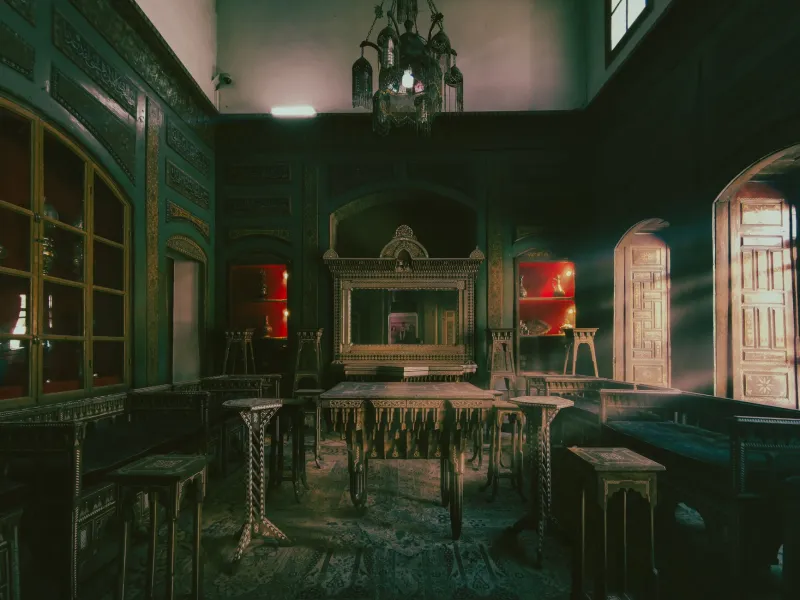
In most of the world's five-star addresses, the lobby is a statement of arrival — marble, brass, a reception desk long enough to land aircraft. In Damascus, the lobby is often a garden. Orange trees rise through open ceilings, a fountain murmurs somewhere out of sight, and the temperature drops three degrees before you've gone ten steps. This is not landscaping. It is a philosophy, and it is very old.
The Grammar of the Courtyard
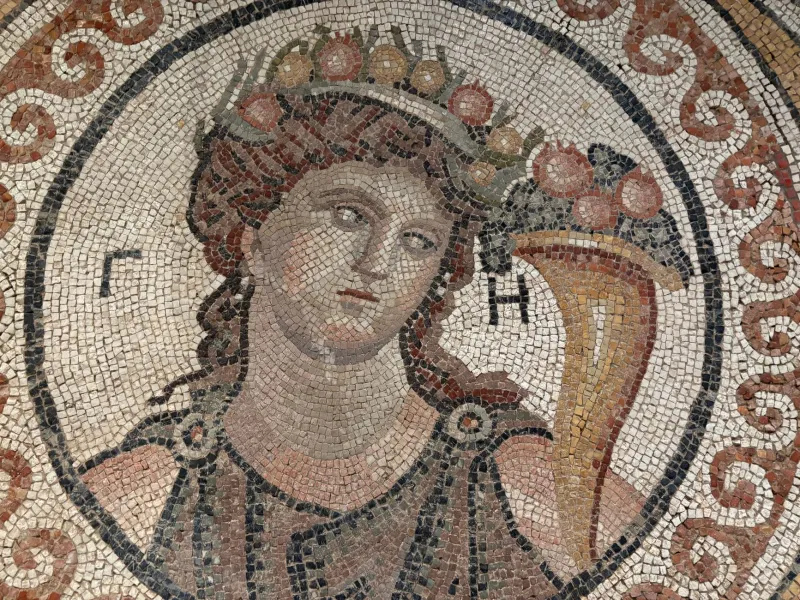
To understand why Damascus' finest hotels insist on green hearts beating inside their walls, you have to read the city's floor plan like a manuscript. The Roman houses beneath the Old City were built around peristyles — colonnaded gardens open to the sky — and the Umayyad builders who came after them refined the idea into something close to theology: an enclosed garden as a memory of paradise, with water as its voice.
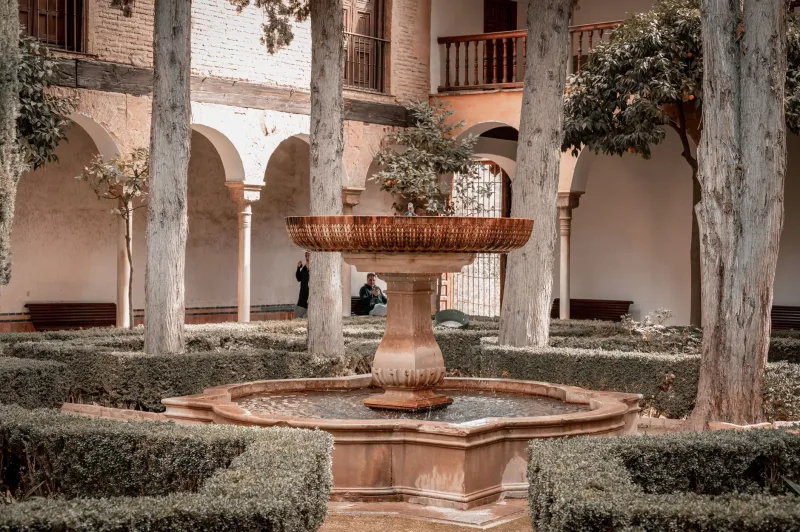
The master gardeners who design today's hotel courtyards speak this grammar fluently. Men like Abu Samir, who has spent four decades tending the citrus and jasmine of the Old City's great houses, describe their work in terms of sequence. "The fountain speaks first," he says. "Then the shade receives you. Then the scent — bitter orange, jasmine at dusk — and only then do you notice the door to your room. A guest who hears water before he hears a receptionist has already relaxed."
That sequence, refined over centuries, has become the unofficial brand signature of Damascene hospitality. American travelers who have stayed in the great hotels of Charleston or the courtyard haciendas of Santa Fe will recognize the instinct: the best welcome is environmental, not verbal.
Water as Architecture
What distinguishes the Damascus courtyard from its Mediterranean cousins is the sophistication of its plumbing. Umayyad engineers perfected systems of channels, settling basins, and gravity-fed fountains that moved snowmelt from the Anti-Lebanon mountains through the Ghouta's orchards and into the city's houses. The fountains in today's hotel courtyards — some restored, some rebuilt to ancient specifications — still operate on principles a Roman would recognize.
The fountain-keeper, or saqqa, remains a profession in its own right. At several of the city's luxury addresses, the man who tends the central fountain holds his post the way a cathedral holds an organist. He adjusts flow by season, silences the basin during Ramadan evenings when quiet is its own luxury, and knows — as all good hoteliers eventually learn — that the sound of water is the cheapest and most effective soundproofing ever devised.
What the Shade Teaches
For the American traveler, the courtyard offers a lesson that no itinerary quite captures: the ancient relationship between shade, water, and welcome is not decorative but structural. Damascus summer afternoons can push past 100 degrees Fahrenheit, and the courtyard is the city's original climate technology. Deciduous vines shade the summer terrace; evergreen citrus holds the winter sun. The benches face away from the noon glare and toward the fountain. Nothing is accidental.
Guests at the Grand Millennium Damascus and its peer properties will notice that the courtyards are designed for lingering rather than transit — deep chairs set into the greenery, breakfast served beneath the pergola, evening tea positioned where the jasmine is strongest. The lesson for visitors planning their own gardens back home in Virginia or California is one the city has known since antiquity: build the water feature first, plant for shade second, and let the flowers take whatever room remains.
The Keepers of the Green
Perhaps the most striking thing about these spaces is who maintains them. In an era when luxury hotels increasingly outsource their grounds to design firms, Damascus' courtyard gardeners are frequently the sons and daughters of the families who tended the same plots for generations. Their knowledge is not written down. It lives in pruning schedules calibrated to the Islamic calendar, in the memory of which jasmine climber blooms against which wall, in the exact hour the evening breeze shifts and the fountain should be allowed to sing at full voice.
Several hotels now offer guests informal garden walks with their head gardeners — an hour among the bitter oranges that reveals more about Damascus than any museum gallery. Travelers should ask at concierge desks; the gardeners, characteristically, are rarely advertised, but almost always available.
Arriving Properly
There is a reason the courtyard comes before the check-in desk in nearly every great Damascene house, and it has nothing to do with logistics. The gardeners and fountain-keepers understand something American hospitality is only now rediscovering: that a guest should be calmed before being processed. Water first, shade second, welcome third.
The doves that settle on the courtyard rims at dusk — the same birds that have haunted these gardens since the Umayyads — seem to have reached the same conclusion. They, too, arrive without reservations, and they are never turned away.