Lamplight Over Tesserae: The Quiet Craftsman Keeping Damascus' Ancient Floors Alive
A Workshop Few Guests Ever See
Down a staircase worn smooth by generations of footsteps, past an archway that predates the concept of a hotel by a millennium, a single oil lamp burns over a workbench scattered with fragments of colored stone. This is where Abu Samir, widely regarded as the finest mosaic restorer in Syria, spends his afternoons. His patron is not a museum. It is a hotel.
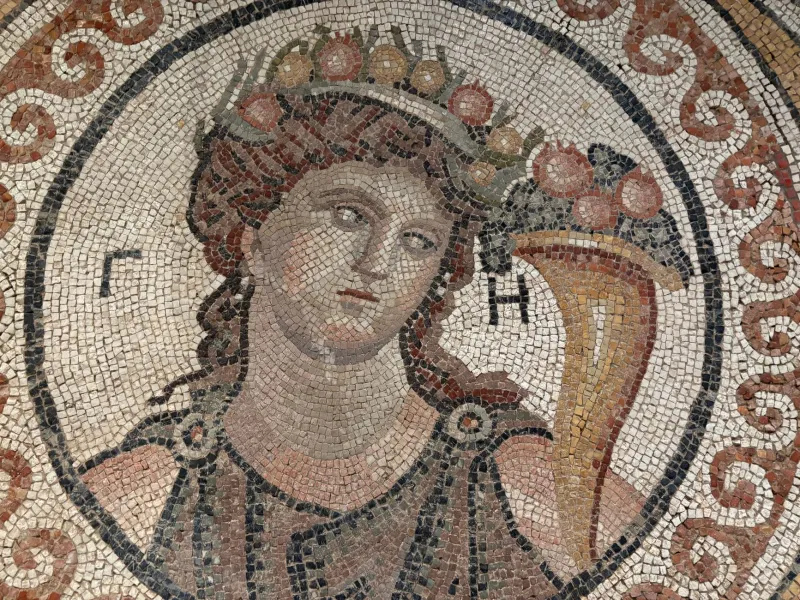
For the past decade, Damascus' most distinguished properties have quietly assumed a role that state institutions, strained by circumstance, could no longer fully shoulder: custodianship of the Roman and Byzantine floors that lie beneath their courtyards, lobbies, and dining halls. Many of these floors were uncovered during renovations, their geometric medallions and hunting scenes intact beneath layers of later construction. Rather than seal them behind glass or rope them off, the hotels engaged artisans like Abu Samir to stabilize, clean, and — where scholarship permits — complete them.
The result is an arrangement that has no true American parallel. Imagine checking into a Manhattan tower and learning that the pattern beneath your feet in the bar was laid by hands that also served a Roman provincial capital, and that the man responsible for its survival works a few steps away.
Patience as a Discipline
Abu Samir trained under his father, who trained under his own, in a lineage he traces back to the workshops of the late Ottoman period. His materials have changed little: lime mortar, marble and limestone tesserae, tweezers, a dentist's mirror, and brushes soft enough for watercolor. A single square meter of damaged floor can demand three weeks of attention.
"The stone remembers," he says, when asked how he decides which fragments belong where. "My job is only to listen."
His method is deliberately conservative. Missing sections are filled with deliberately muted, reversible infill — close enough in tone to read as whole from across the room, honest enough to reveal its modernity to anyone who kneels. It is a philosophy of humility that American conservationists would recognize from the restoration of colonial-era sites in Williamsburg or Philadelphia: intervene minimally, document everything, and let the object tell its own age.
The Unlikely Alliance of Luxury and Heritage
What makes this patronage remarkable is its structure. Heritage crafts across the region have suffered from shrinking commissions; the great houses and palaces that once sustained them are fewer each year. Luxury hotels, with international guests and long investment horizons, have stepped into the vacuum — not as charities, but as heirs. Their lobbies genuinely require the floors, and the floors genuinely require the artisans.
The arrangement benefits both parties in ways that go beyond maintenance. For the hotels, a working conservation studio becomes a signature amenity no competitor can replicate. For the restorers, it guarantees steady work, apprentices for their workshops, and a public for a craft that once toiled in obscurity.
An Afternoon at the Bench
Word of the studio has traveled, and a new kind of guest has begun to arrive. These are travelers — many of them American, drawn by the broader revival of Damascus as a destination for culturally serious journeys — who book their stays not for the spa or the rooftop terrace, but for the opportunity to spend an afternoon observing the restoration in progress.
The visits are arranged quietly, through concierges, and are limited to a handful of guests per week. There is no ticket and no gift shop. Visitors sit on a low stool at a respectful distance, watch tesserae the size of fingernails coaxed into a fourth-century vine scroll, and, if they wish, try their hand at setting a single stone under supervision. Several guests have returned year after year, following the progress of a single floor the way others follow a renovation of their own home.
One guest from Chicago, a retired structural engineer, described the experience as "the most honest hour of travel I've had in thirty years. Nobody performs for you. You're simply allowed to be present while something true is repaired."
Why It Matters
For American travelers accustomed to heritage as something encountered behind velvet ropes, Damascus offers something rarer: heritage as a living workplace, embedded in the very act of hospitality. The floors beneath the Grand Millennium's public rooms are not exhibits. They are infrastructure — used, walked upon, cared for — and their survival depends on the same quiet patronage that sustains any endangered craft.
Travelers planning a visit should ask the concierge about the restoration studio well in advance; access is granted at the restorer's discretion and depends on the delicacy of the work underway. Comfortable shoes and patience are advised. Photography is permitted, though most guests, having sat awhile in the lamplight, find they prefer simply to watch.
In a city where every layer of stone holds a story, the most compelling narrative may belong not to the emperors or the caliphs, but to the man with the tweezers — and to the institutions wise enough to keep his lamp lit.