While Manhattan Dreams: The Night Shift Rituals of a Damascus Grand Hotel
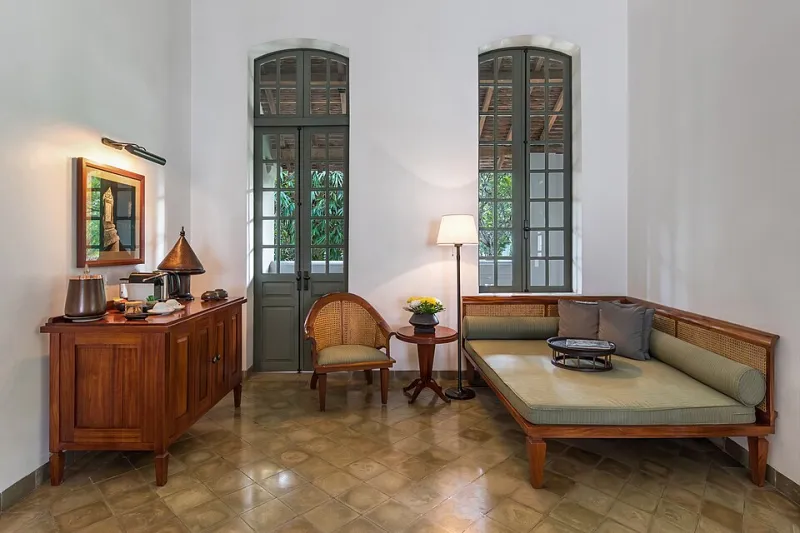
Photo: Basile Morin, CC BY-SA 4.0, via Wikimedia Commons
It is 9 p.m. on a Tuesday in Chicago. Office lights are flickering off along the Loop, and the last commuter trains are pulling toward the suburbs. In Damascus, it is 4 a.m. the next day — and inside one of the city's grand courtyards, the most important shift of the hotel's day is only now reaching its stride.
American travelers often assume luxury hotels simply pause overnight, a static stage awaiting morning guests. In Damascus, the night is the most productive act of the performance. What follows is an hour-by-hour account, assembled from conversations with the night porters, bakers, and engineers who keep the property humming while an entire continent sleeps.
11 P.M. Damascus — The Handover of the Black Book
The evening manager sets down a leather-bound ledger at the front desk, and the night porter — a position in this city that predates the telephone — signs for it in ink. Unlike digital logs common in American hotels, the overnight record here is handwritten, page after page: which guest requested a wake-up call for a dawn departure to the airport, which suite has a dripping tap, which fountain jet is running low.
For the night porter, the ledger is not bureaucracy. It is a covenant. Every entry is a promise that someone was watching while you slept.
Midnight — The Fountain Falls Silent
The central courtyard fountain, a marble composition older than the hotel itself, is drained and inspected four nights a week. Engineers in rubber boots wade through ankle-deep water, scrubbing mineral deposits from the spouts and checking the 19th-century lead piping that city authorities would never permit to be replaced.
The work must finish by 2 a.m., when the basin refills — because the fountain, the staff insists, must be running when the first guest draws back their curtains.
1 A.M. — The Marble Hour
With the corridors empty, the housekeeping night crew begins what they call the marble hour. Polishing machines are banned after midnight for noise reasons; instead, floors of local stone are buffed by hand with sheepskin cloths and a mixture of olive oil soap that has been made in the same workshop outside the Old City for generations.
It is slow, meditative work. A single corridor can take ninety minutes. The payoff is that particular soft gleam under lamplight that guests photograph the next morning without ever knowing why it looks different from any other hotel.
3 A.M. — The Ovens Wake
Down in the kitchen, the night bakers arrive as the fountain engineers clock out. The taboon ovens, clay-lined and wood-fired, are brought up to temperature over two hours — a process no gas oven can replicate.
By 4 a.m., the first flatbreads are done. By 5, the kitchen smells of anise and mahlab, the cherry-pit spice that perfumes the city's festive breads. American guests waking at dawn for a flight often describe the 4 a.m. aroma drifting through courtyard windows as the single most memorable detail of their stay — a scent no room-service menu can list.
4 A.M. — The Prayer Call and the Quiet Fleet
As the first call to prayer rises over the rooftops, the night team performs its final sweep: luggage manifests checked for early departures, cars staged at the entrance with engines warmed or cooled depending on the season, and the day's newspapers — including international editions flown in — sorted and slipped into door handles.
The night porter makes one last entry in the black book, then reads back through the night's pages. Nothing was missed. The fountain is running. The bread is rising.
6 A.M. Damascus, 11 P.M. New York — The Handover Back
The day manager arrives to find a hotel that appears untouched, as though it simply maintained itself through the dark hours. That illusion is the point. The best night shift is the one nobody notices.
For American travelers — particularly those battling jet lag, awake at strange hours in an unfamiliar city — there is a quiet comfort in knowing that at 3 a.m. Damascus time, someone is walking the corridors with a sheepskin cloth and a flashlight, keeping watch. Eight time zones ahead of New York, the invisible machinery of hospitality never stops. It simply changes hands.