Arrival Without a Lobby: The Damascene House That Became a Hotel
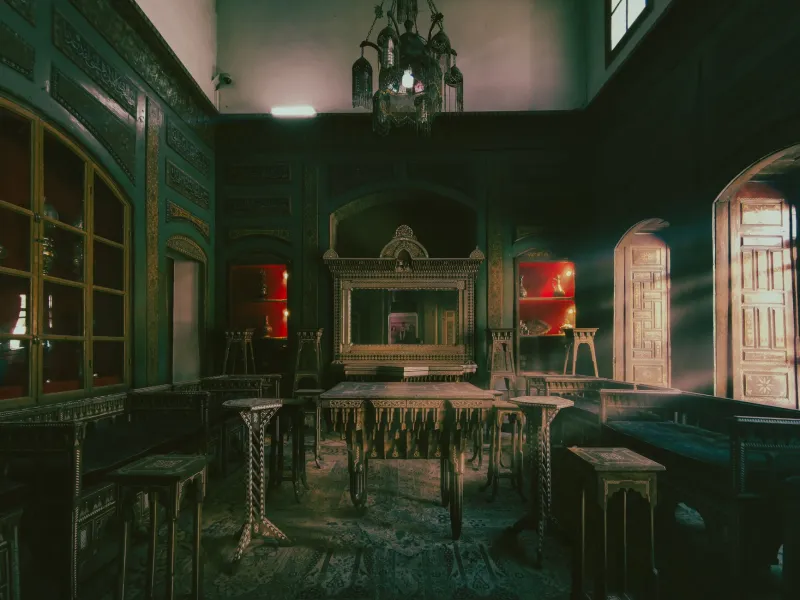
For generations, the luxury hotel has been defined by its lobby. From the painted ceilings of grand European railway hotels to the soaring atria of the American convention palace, that first room has always told you everything: how much your room costs, how important you are, who is watching. It is a stage, and arrival is the performance.
The newest boutique address in old Damascus has quietly declined to participate. There is no lobby. There is no front desk in the conventional sense. There is, instead, a door — a plain, beautifully proportioned door in a centuries-old wall — and beyond it, a sequence of courtyards that the property's architect describes as 'the fifth room of the house.'
The House That Became a Blueprint
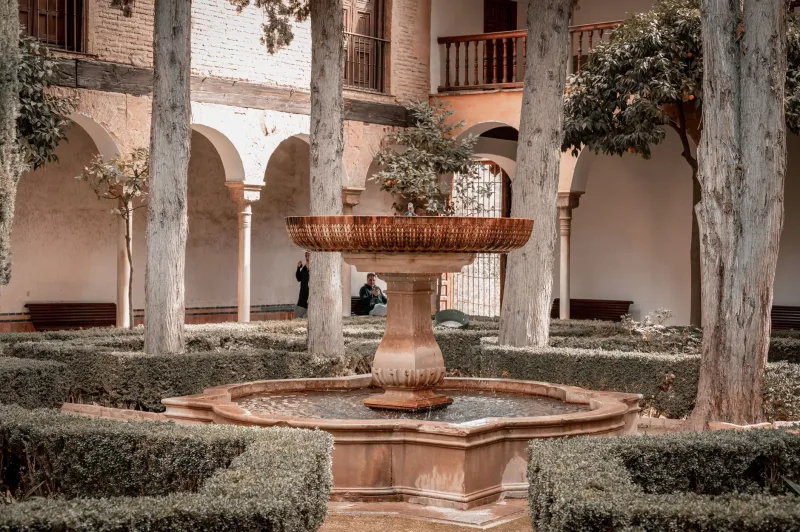
To understand the design, one must understand the traditional Damascene house. Built inward around a central courtyard, these homes turned their backs on the street and saved their beauty for those invited inside. Fountains, citrus trees, and iwan loggias were private pleasures, not public displays. Status lived in the quality of the welcome, not the size of the threshold.
The hotel's architect, who spent three years studying surviving courtyard houses in the old city, puts it plainly: 'In Damascus, we never showed wealth at the door. We showed it in the journey inward. A lobby is a room that announces you. A courtyard is a room that receives you.'
Guests at the property arrive through a series of three progressively more intimate spaces — a shaded entry court, a fountain court where check-in happens seated, over coffee rather than across a counter, and finally the private residential court onto which the suites open. Each transition is a decompression. By the time a guest reaches their room, the noise of the street, the jet lag, the transaction itself, have all been left behind two thresholds ago.
What This Means for the American Traveler
For visitors from the United States, the effect can be disorienting at first — and then revelatory. American luxury hospitality is built on legibility: the bellman, the desk, the club level, the lounge. Status is spatial and visible. In the courtyard model, status is inverted. The most coveted rooms are the hardest to find, tucked behind unmarked doors along the third court. There is no one to watch you arrive, and no one to watch you not.
'I had a guest from Chicago tell me she felt like she was checking into a private home,' the general manager says. 'She was right. That is precisely the point. In her city, the hotel lobby is a place to be seen. Here, it is a place to stop being seen.'
The seated check-in — juice and cardamom coffee in the fountain court, conducted in under ten minutes — replaces the counter transaction with something closer to being received as a houseguest. Billing is handled digitally. Porters appear only when summoned. The concierge operates from a small writing desk in an alcove, less a desk than a study.
Privacy as the New Amenity
The property's operators believe they are reading a genuine shift in American taste, not merely a local quirk. The post-pandemic luxury traveler, they argue, has grown wary of the theater of the grand hotel — the visible hierarchies, the public arrival, the sense of being processed. Surveys of US luxury travelers consistently rank privacy and authenticity among their top motivations, and the courtyard model delivers both structurally rather than cosmetically.
There is also a practical dimension. The thick stone walls and inward orientation of the traditional house make natural climate control possible; the courts stay degrees cooler than the street in summer. Sound insulation is superb. The layout means the hotel can host full occupancy while the street outside reveals nothing at all.
A Playbook, Quietly Rewritten
The general manager is careful not to frame the property as a rejection of the grand hotel — the city's larger addresses, with their lobbies and ballrooms, remain part of a healthy ecosystem. But he does believe the courtyard model offers a lesson the industry is only beginning to absorb: that arrival can be an experience of intimacy rather than spectacle.
'The American guest does not need to be impressed,' he says. 'She needs to be received. There is a difference, and the old houses of Damascus understood it four hundred years before we did.'
For the traveler willing to trade the marble hall for a fountain court, the reward is a version of luxury that cannot be photographed from the street — only experienced from within. In a city that has always saved its beauty for the invited, that may be the most authentic amenity of all.
Planning Your Stay
The property accepts a limited number of arrivals per day to preserve the intimacy of the courtyard sequence, and late-evening check-ins are accommodated by prior arrangement. Travelers combining a stay here with the city's broader five-day itineraries should book the third-court suites well in advance; they are, fittingly, the ones no one can see from outside.