Ink Before Algorithms: The Concierges of Damascus Who Draw the City by Hand
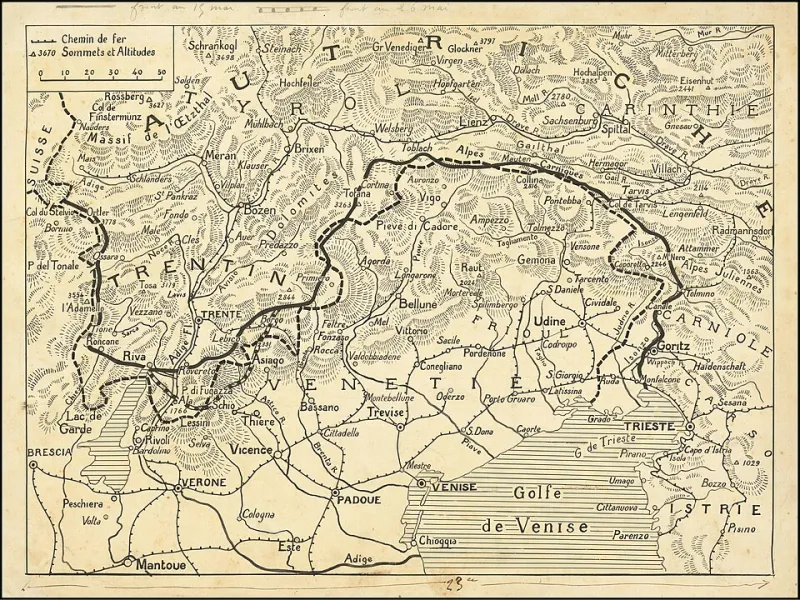
Photo: H.M., Public domain, via Wikimedia Commons
There is a moment, familiar to nearly every American guest who checks into a Damascus luxury hotel, when the concierge uncaps a fountain pen.
No tablet appears. No printed brochure slides across the marble counter. Instead, a sheet of heavy cream paper is smoothed flat, and within minutes, the Old City begins to take shape — not as it appears on Google Maps, but as it exists in the memory of a man who has walked its alleys for thirty years.
This is the concierge's cartography, and it has quietly become the most requested amenity at Damascus' finest addresses.
A Ritual of Ink and Intention
The hand-drawn map is not new to the Middle East; it is older than the printing press. What is new is its return to luxury travel at precisely the moment American travelers have grown weary of algorithmic sameness. Where an app shows the fastest route, a concierge's sketch shows the right one — the courtyard behind an unmarked door, the bakery whose bread is pulled from the taboon at 5:40 in the morning, the copper-smith whose family has worked the same bench for four generations.
Abu Tariq, head concierge at a flagship property near Souq al-Hamidiyah, estimates he has drawn more than two thousand maps over his career. Each one is different.
"The map is a conversation," he explains, leaning over a half-finished sketch. "A guest from Chicago tells me she loves textiles. A guest from Boston tells me his grandfather was a baker. The same streets, but the map is never the same. I am not drawing the city. I am drawing the city for you."
His drawings have a visual grammar all their own: heavy dots for doorways worth pushing open, small crescents marking the shadow line at dusk, a tiny star where the call to prayer sounds clearest.
Why American Travelers Are Asking for Paper
The trend reflects a broader shift among US luxury travelers — the same crowd driving the analog revival in American hotels, from vinyl listening rooms to handwritten welcome notes. In Damascus, that appetite meets a city where digital infrastructure can be inconsistent and where the most extraordinary experiences are, by nature, unlisted.
There is no Yelp entry for the dawn bread queue on a side street off the Street Called Straight. There is no review page for a grandmother who sells rose-petal preserves from a window ledge. These places survive in one medium only: the memory of people like Abu Tariq.
Hotel managers report that requests for "the map" now appear on pre-arrival questionnaires with striking frequency, often before requests for airport transfers or spa reservations. Some returning guests ask for their previous map to be redrawn — the original having been framed at home, somewhere between Denver and Dallas.
One Day, One Sheet of Paper
To understand the ritual's power, follow a map through a single day.
A guest — let us call him David, a software executive from Seattle — begins at the point marked with a small sun: a bakery where the first flatbread of the morning is still blistering when he arrives at six. The concierge has written a single word beside the dot: za'atar. It is enough.
Midmorning, the map steers him through a covered passage he would have walked past three times without noticing. It opens into a courtyard where a calligrapher works beneath a grapevine trellis. David later admits he had planned to spend the morning answering emails. He does not.
Lunch is a circle around a small square — a family restaurant with eight tables and no sign. The concierge has drawn an arrow to a particular table beneath the lemon tree, and added a note in careful English: Order what the owner's mother is eating.
By evening, the paper is soft at the folds and faintly scented with cumin and cardamom. David has spoken to a dozen people, been invited to two homes, and taken exactly zero photographs of his phone screen showing directions. The map, creased and annotated with his own pencil marks, goes home in his passport wallet.
"I've traveled with GPS in forty countries," he says. "This is the first time I've ever felt like the city was expecting me."
An Analog Luxury That Cannot Be Scaled
Part of the map's allure is precisely that it cannot be industrialized. A concierge can produce perhaps five in a day, each requiring an hour of conversation before the pen touches paper. It is hospitality in its most literal form — the hotel's knowledge, made personal and portable.
Some properties now present the finished map in a linen envelope with a wax seal, an indulgence that transforms a navigational tool into a keepsake. Guests have been known to return years later asking whether Abu Tariq remembers their route. He almost always does. "I remember every map," he says. "The paper is yours. The memory is ours."
For American travelers planning a Damascus journey, the advice from veterans is simple: when the concierge asks what you love, answer honestly, and answer in detail. The ink is waiting. And the city it reveals — the courtyards, the queues, the unmarked doors — exists on no screen anywhere in the world.