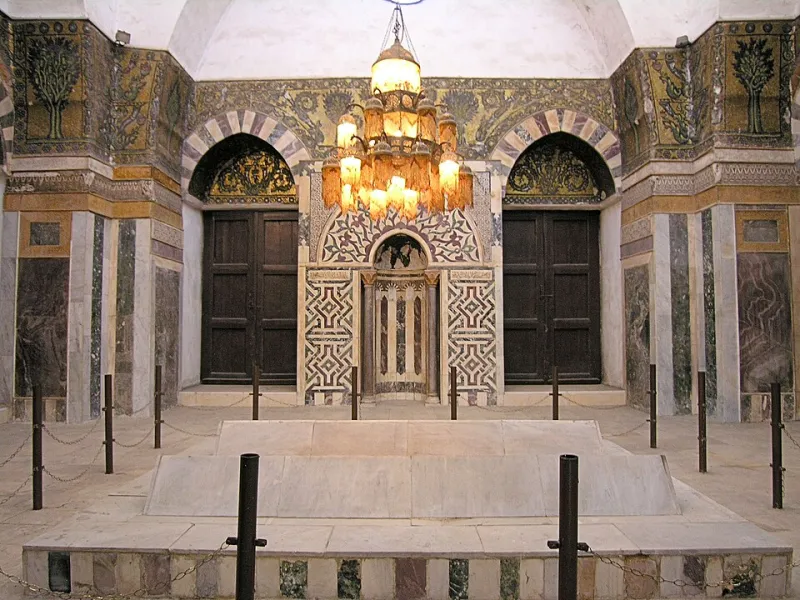
Forty-Eight Hours, One Loom: The Secret Personal Shoppers of Damascus' Five-Star Hotels
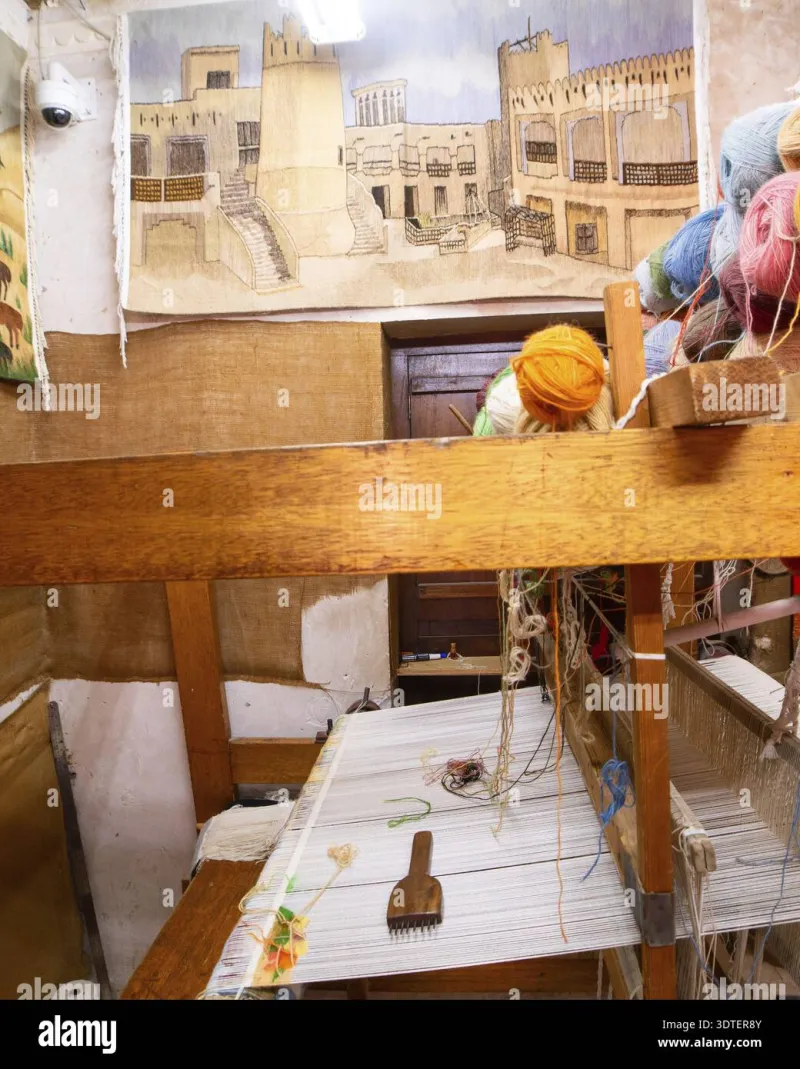
Photo: artisan weaver handloom silk weaving workshop traditional Middle East, via c8.alamy.com
There is a moment, familiar to any serious traveler, when a souvenir stops being an object and becomes an obligation. You buy the brass tray, the hand-blown glass, the embroidered cushion — and then you spend the flight home wondering what, exactly, you will tell people it cost. In Damascus, a small circle of hotel concierges has built an entire service around avoiding that moment altogether.
They call it craft concierge, and it may be the most quietly transformative luxury amenity to emerge from Syria's capital in decades. Forget the gift shop. Forget even the curated boutique. What Damascus' five-star properties now offer is something closer to personal representation: staff who can arrange after-hours access to master weavers, negotiate commissions with third-generation brass smiths, and shepherd a one-of-a-kind piece from workshop to warehouse to your front door in Boston or Chicago.
The Workshop Behind the Unmarked Door
The Old City of Damascus still functions largely as it has for centuries — a lattice of covered souks, hidden courtyards, and family workshops where skills are passed down without ever appearing on a website. The finest of these artisans rarely advertise. Many do not speak English. Most will not negotiate with a stranger on the street at any price.
A hotel concierge, however, is not a stranger. The relationship between Damascus' leading properties and the artisan families of the Old City runs back generations, sometimes to before the hotels themselves existed. That trust is the entire product. When a guest expresses interest in a commission, the concierge does not hand over a brochure; he makes a phone call, walks the guest down an alley a taxi driver would never find, and introduces them by name to a craftsman who has been expecting them.
For American visitors accustomed to the frictionless retail of Madison Avenue, the effect is deliberately old-fashioned. You do not browse. You are received.
A Tablecloth, From Sketch to Loom
Consider the case of a guest from Seattle — a technology executive with two days in Damascus and a dining room table at home that, by her own account, had never once hosted anything memorable. She wanted a damask tablecloth. Not the machine-loomed fabric that shares the name in American department stores, but the genuine article: silk and cotton woven on a hand-operated loom in the Old City, in a workshop of perhaps six people.
The concierge arranged a sketching session that first evening. The weaver's design master produced three patterns on paper — one classical, drawn from Umayyad-era motifs; one geometric, closer to the woodwork of the city's great mosques; one an original composition that blended the two. The guest chose the third. Thread colors were matched against a photograph of her dining room, an exercise that took longer than the weaving would later take.
By the following afternoon, the loom was threaded. She was invited to watch the first pass — a slow, hypnotic rhythm of shuttle and treadle that has not materially changed since her great-grandmother's era. The workshop stayed open past its usual hours for her visit, a courtesy extended through the hotel and no one else.
The cloth itself would take weeks to complete. That is the final, crucial service of the craft concierge: the shipping crate. The hotel coordinates freight forwarding, documentation, and customs paperwork, so the finished piece arrives in the United States with the same discretion as any luxury purchase — except this one exists nowhere else on earth.
Why American Travelers Are Paying Attention
The rise of the craft concierge reflects a broader shift in what affluent American travelers expect from a luxury hotel. The post-pandemic years have been unkind to the accumulation of things; the market has spoken clearly in favor of provenance, process, and story. A guest who watched her tablecloth take shape on a thousand-year-old loom will never describe it the way she describes a purchase from a duty-free catalog.
Damascus is unusually positioned to serve this appetite. Few cities on the planet can claim an unbroken artisanal lineage this deep. The damask weave is, after all, named for this city — a fact that carries considerable weight when the fabric on your table has a plausible claim to being the original.
The hotels, for their part, have been careful to keep the service understated. There are no glossy brochures. Requests are handled the way a private bank handles a portfolio review: one guest at a time, by referral or reputation, with the concierge desk as the sole point of contact.
The New Definition of a Souvenir
What the craft concierge ultimately sells is not cloth or brass or mother-of-pearl. It is participation. The souvenir that results — a tablecloth, a commissioned lamp, a set of hand-hammered serving pieces — is merely the receipt for an experience that most travelers never learn is available.
For the American visitor with limited time and unlimited curiosity, the proposition is simple: skip the shop, and buy the workshop instead. In Damascus, the door is already open. You only need to know which one — and the right concierge does.