Golden Hour Above the Minarets: Inside Damascus' Quietly Spectacular Rooftop Revolution
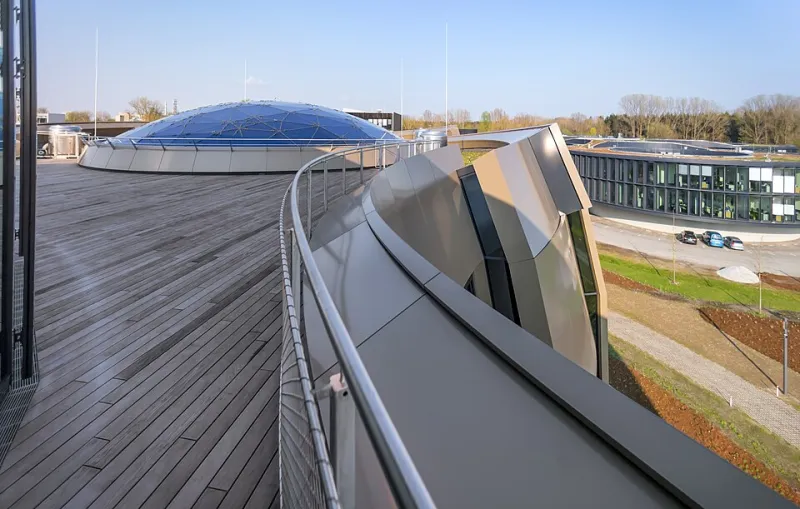
Photo: ESO/P. Horálek, CC BY 4.0, via Wikimedia Commons
There is a moment, roughly twenty minutes before sunset in Damascus, when the entire old city performs a slow transformation. The limestone of the Umayyad Mosque catches the last of the light and turns the color of bruised gold. The minarets darken into silhouettes. Somewhere below, the call to prayer begins, and it rises — literally and acoustically — toward the rooftops where a growing number of travelers have gathered with mint tea, arak, or an expertly made negroni in hand.
For American luxury travelers who have already done the sunset circuit — Istanbul's Galata Tower crowds, Marrakech's café terraces above Jemaa el-Fnaa, Athens' rooftop bars framing the Acropolis — Damascus is emerging as the scene nobody saw coming and everybody will eventually claim they discovered first.
The View That Rewrites the Category
What distinguishes Damascus from its Mediterranean peers is not merely elevation but intimacy. In Istanbul, the Golden Horn views are grand but often distant, filtered through glass and crowds of cruise passengers. In Marrakech, the medina sprawls flat and pink, beautiful but undifferentiated from above. Damascus offers something rarer: a layered, vertical city where seven thousand years of continuous habitation stack visibly beneath you.
From a well-positioned rooftop suite in the old city's hotel quarter, a guest can trace the entire arc of urban civilization in a single glance. The Roman temple columns embedded in the mosque's southern wall. The Ottoman-era courtyards, their orange trees visible over garden walls. The straight Roman street plan of the Via Recta, still in use, still lined with shops whose awnings shade Roman flagstones. And beyond it all, Mount Qasioun rising to the northwest, its slopes dotted with the lights of restaurants and overlooks where Damascenes have watched sunsets since antiquity.
No other city on the American luxury traveler's mental map compresses history into a single panorama quite this way. Rome scatters its antiquity across a sprawl. Athens buffers its Acropolis with modernity. Damascus simply hands you the whole continuum at once.
The Sunset Ritual, Damascene Style
Every great rooftop city develops a ritual, and Damascus is no exception. But where Istanbul's ritual involves jockeying for table position and Marrakech's involves negotiating with terrace owners, the Damascene version is unhurried by design.
The evening typically begins on a shaded upper terrace in the late afternoon, when the heat still clings to the stone and the sensible move is a chilled glass of tamarind sherbet or jallab — the grape-molasses and carob drink that tastes like summer distilled. As the temperature breaks, kitchens below begin sending up mezzeh: hummus crowned with pine nuts, muhammara with its walnuts and pomegranate molasses, fatteh assembled table-side. By the time the light turns amber, the terrace has become a salon.
This is the part that surprises American visitors most. The rooftop hour in Damascus is not a performance staged for tourists. It is the city's own social hour, extended upward. Families celebrate engagements on adjacent terraces. Students from the university argue politics over cards. Old men play backgammon with the intensity of Wall Street traders. A traveler with a rooftop table is not watching the city; they have been folded into it.
Skyline Suites and the New Power View
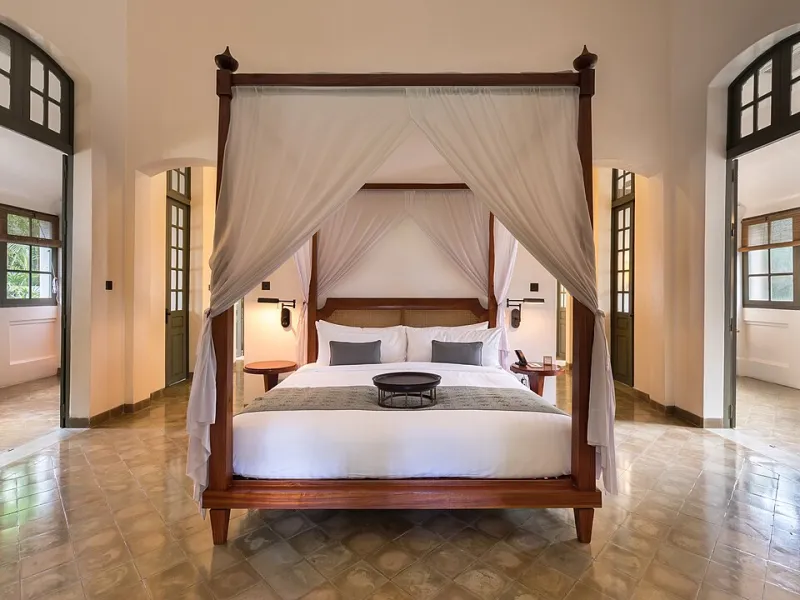
The hospitality scene has responded to demand with a wave of upper-floor accommodations that treat the view as the primary amenity. The finest properties in and around the old city now reserve their crown floors for suites with wraparound terraces, plunge pools cantilevered toward Qasioun, and glass-walled lounges positioned for the mosque's evening illumination.
Within Grand Millennium Damascus, the upper suites have been oriented with almost obsessive attention to sightlines — the bathtub framed for the minaret view, the private terrace angled to catch the first call to prayer of the evening. It reflects a broader shift in what affluent Americans now seek from a hotel: not marble and logos, but a vantage point money can articulate and memory cannot replicate.
Travel advisors who specialize in the region report that requests for "the room with the view of the mosque" now arrive with the same specificity once reserved for Paris hotels and Eiffel Tower angles. The Damascus skyline suite has become, in the parlance of the trade, a power view — the kind of perspective that signals to everyone on your Instagram feed that you went somewhere they did not.
Why Now
Part of the appeal is arithmetic. Comparable rooftop experiences in Istanbul's five-star hotels command premium rates and require reservations weeks out. In Marrakech, the famous terraces are, in high season, standing room only. Damascus offers the same golden-hour theater with a fraction of the audience, and the value proposition extends from the view to the bill.
But the deeper reason is emotional. American travelers have grown skeptical of manufactured luxury — the infinity pool that could be anywhere, the lobby indistinguishable from Miami to Singapore. They want places with a genuine address in history. A rooftop in Damascus delivers that in a way few destinations can: the certainty that the view before you would be recognizable to a merchant of the Umayyad era, a Mamluk scholar, an Ottoman pasha, and your grandmother's generation alike.
The sun sets over Qasioun every evening, as it always has. The difference is that now there is a comfortable chair, a well-made cocktail, and a suite upstairs waiting for you when the last light leaves the minarets. The scene is quiet, spectacular, and for the moment, wonderfully uncrowded. It will not stay that way forever.