From Jellab to Tamarind: The Ancient Drinks Being Poured Beside Damascus' Finest Tables
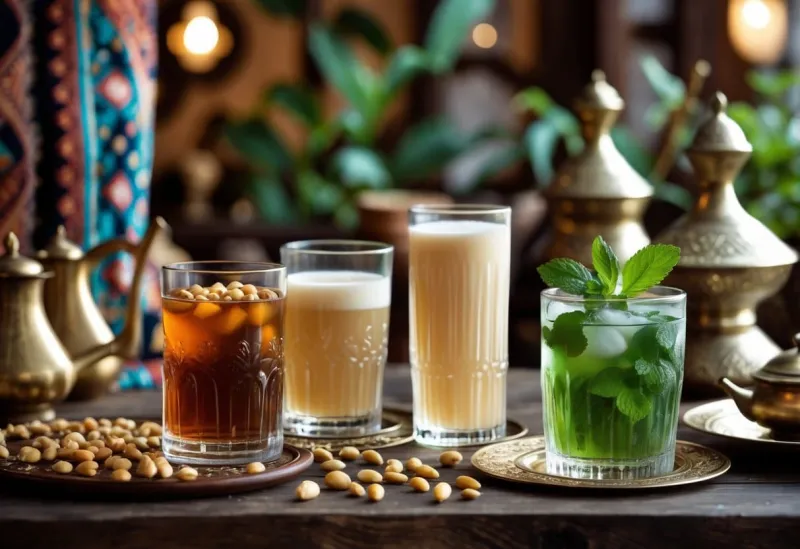
Photo: traditional Middle Eastern drinks jellab tamarind glasses luxury restaurant table, via amazingfoodanddrink.com
American travelers have grown fluent in the language of pairing. We understand that a buttery Chardonnay flatters lobster, that a bold Cabernet demands red meat. What almost none of us expect — walking into a fine-dining room in Damascus, napkin unfolded, menu studied — is to be handed a tasting flight that begins not with wine, but with a chilled glass of jellab.
And yet, across the grand dining rooms of the Syrian capital, this is precisely what is happening. A beverage tradition older than most European vineyards is being reinterpreted, course by course, for a generation of travelers who thought they had tasted everything.
A Cellar Without Wine
Damascus has never been a wine city in the way Bordeaux or Napa are. Its drinking heritage flows from a different source entirely: the sherbet houses and tonic sellers of the old souks, where beverages were built from flowers, fruits, spices, and ice — long before refrigeration made such luxuries ordinary.
The canon is deep. Jellab, the deep amber syrup of molasses, dates, and raisins, crowned with golden pine nuts and plump raisins, has refreshed pilgrims and merchants for centuries. Tamarind sherbet, sour and darkly sweet, was the drink of Ramadan evenings long before it became a sommelier's experiment. Rosewater infusions, aniseed-based spirits served under strict ritual, and qamar al-din — a velvety apricot leather dissolved into liquid sunshine — round out a repertoire that hotel beverage directors now treat as a working palette.
"Guests arrive expecting to be disappointed," one hospitality director told us, asking that we not use his name. "They expect tea or nothing. Then the pairing menu arrives, and they realize this city has been thinking about flavor for four thousand years."
The New Tasting Ritual
At the city's most ambitious tables, the pairing menu now unfolds like this: a bright tamarind sherbet cut through slow-braised lamb, its acidity doing the work a dry Riesling would; a rosewater infusion beside pistachio kanafeh, echoing rather than competing with the dessert's floral notes; and jellab, poured over crushed ice with a spoonful of pine nuts, served as a digestif — a role it has played in Damascus courtyards for generations.
The logic, chefs explain, is the same logic that governs any great wine list: contrast, echo, and cleansing. Tamarind's tannic sourness resets the palate after rich mezze. Jellab's dark sweetness stands up to smoked eggplant and grilled meats the way a Syrah might. Rosewater, used sparingly, acts like a late-harvest dessert wine — perfume in liquid form.
Tasting Notes for the American Palate
If you are accustomed to California cellars and Napa tastings, a brief orientation helps:
- Jellab — Think of a fine balsamic-drizzled shrub, or a molasses-forward root beer with better manners. Served ice-cold with nuts floating on top; eat the nuts as you drink.
- Tamarind sherbet — Closest cousin to tamarind agua fresca in Mexico, but tarter and more austere. Excellent with anything fatty or smoked.
- Qamar al-din — Imagine apricot nectar concentrated into silk. Pairs beautifully with custards and mild cheeses.
- Rosewater infusions — Perfume-adjacent; sip slowly. Americans sometimes over-pour. The glass is meant to last the course.
- Aniseed spirits — Reserved for ritual occasions and best experienced in the company of those who know the etiquette. Ask your host; the asking is part of the experience.
Why It Matters Now
The revival is not nostalgia for its own sake. Damascus' hotel kitchens are staffed by chefs who trained in Paris and Dubai and returned home determined to prove that Syrian gastronomy belongs in the global conversation — not as a museum piece, but as a living, evolving craft. The drinks are the most visible front of that effort precisely because they surprise: no traveler expects a beverage program built entirely without wine to be this sophisticated.
For the American visitor, the practical advice is simple. Book the tasting menu when it is offered, mention that you drink little or no alcohol if that is your preference — here, it will not limit you, it will unlock the full flight — and set aside one evening, at least, to simply sit in a courtyard with an unadorned glass of jellab and no agenda at all.
Some pairings are best made with the city itself.