The Quiet Handshake: What Damascus' Fixers Know That Guidebooks Don't
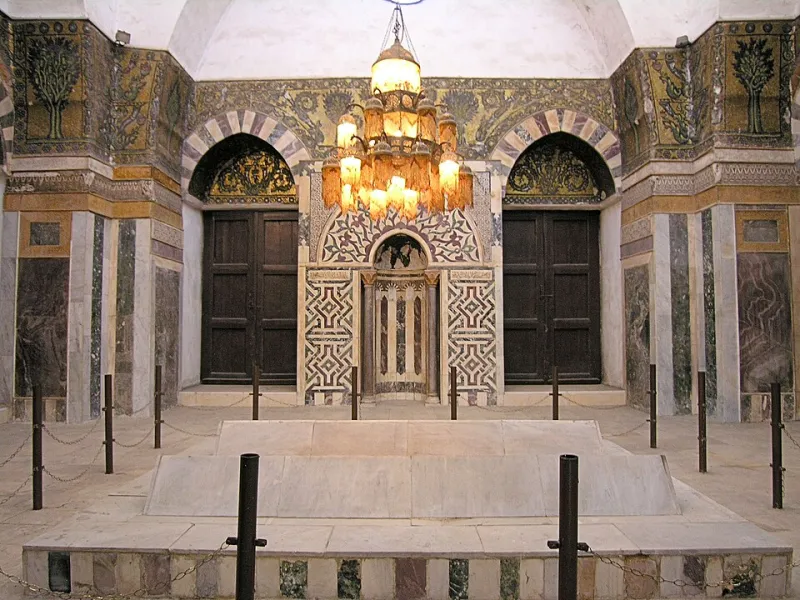
Photo: Francesco Bandarin (Minor retouching done by Robert Prazeres), CC BY-SA 3.0 igo, via Wikimedia Commons
Every luxury hotel in the world has a concierge desk. Very few have what Damascus has: a generation of fixers who came of age navigating a city where the official version of anything was rarely the useful one. The result is a style of hospitality that feels less like service and more like citizenship — and for American travelers arriving in Syria's capital for the first time, it may be the single most valuable amenity included in a five-star rate.
The Men and Women Who Answer the Phone
Ask a concierge at one of Damascus' leading properties how he sourced a private courtyard dinner for twelve on forty-eight hours' notice, and he will wave the question away as if you'd asked how he makes coffee. The truth is less casual. These are professionals who maintain relationships measured in decades — with the archivist who can unlock the Maktab Anbar after closing, with the brocade weaver whose family workshop has no sign and no need for one.
"A guest can find restaurants on their phone," one veteran concierge told me, declining to give his name because, as he put it, "my name is not the product." "What they cannot find is the door that doesn't look like a door."
The Unlisted Address Problem
Damascus' most remarkable experiences share a peculiar quality: they are technically public but practically invisible. The atelier in the Christian Quarter where an eighth-generation metalsmith hammers damascene steel inlays into dagger handles — you can walk past it a hundred times. The rooftop table above a family courtyard in Sarouja where the grandmother cooks only for parties of six or fewer — there is no listing, no reservation system, no website.
Access is brokered, not booked. A concierge makes a call; a favor is acknowledged; a time is set. For American guests accustomed to OpenTable and instant confirmation, this can feel disorienting at first, and then revelatory. It is the difference between buying a ticket to a show and being welcomed into someone's home.
After Hours, Before Anyone Else
The most coveted item in any Damascus fixer's black book is time — specifically, time in places that belong to everyone during the day. The Umayyad Mosque at dawn, before the crowds, when the light comes through the arcade in long amber blades, is a different monument than the one most visitors see. Arrangements for early private viewings of smaller museums and private palaces — many of which are family-run rather than state-run — are made through personal relationships, not ticketing windows.
Travelers from the United States, who are used to paying for VIP upgrades, sometimes misread this economy. The currency here is not cash but standing. A generous tip can be refused; a broken appointment cannot be forgiven. The fixers' advice is uniform: arrive on time, dress with care, ask before you photograph, and send the handwritten note afterward.
What This Means for the American Traveler
The practical takeaway for US visitors is straightforward. Book a property with a serious concierge team — not a desk with a stack of brochures, but people with names and histories. Make your requests through them rather than through apps. Be specific about what interests you: a guest who says "I care about textiles" will be sent somewhere entirely different from one who says "I want to understand the food."
And recalibrate your expectations about what money buys. In Damascus, a large budget gets you comfort. What it does not get you — what only the black book gets you — is the sense of being let in on something. That, as the city's fixers would be the first to tell you, is the actual luxury.